
BJJ Belt Rankings for Kids at Gracie Barra Davenport
Every belt from white to green — what each rank means, what your child is learning, and how they earn the next one.
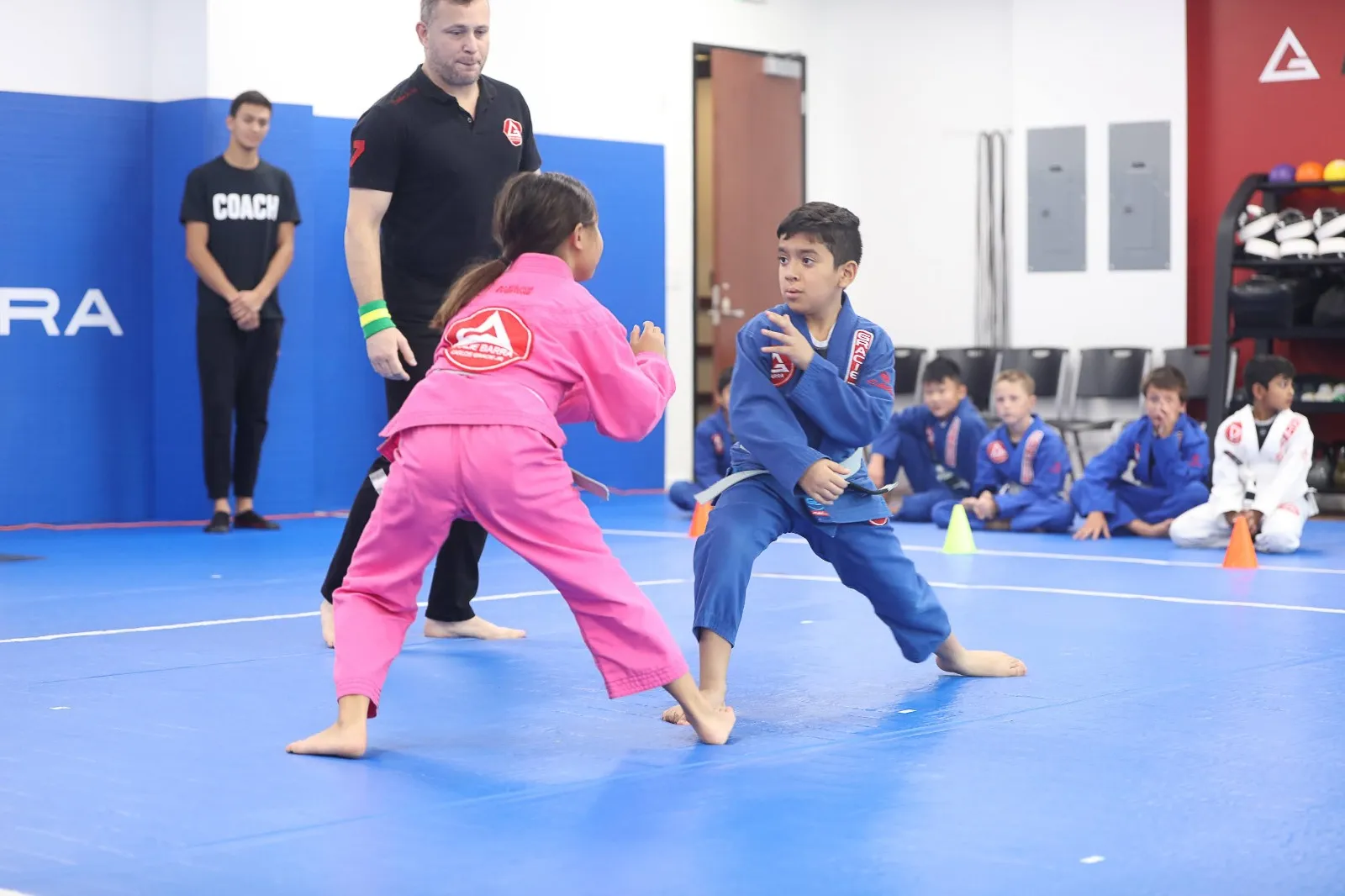
The belt system in kids Brazilian Jiu-Jitsu is purpose-built for children — it's not a simplified version of the adult system. It accounts for how children develop physically and mentally, and it's structured to keep young practitioners motivated over the long arc of their training. At Gracie Barra Davenport, belt progression is one of the most meaningful experiences a child goes through in the program.
The Kids BJJ Belt Order
Children under 16 follow a separate progression from adult students. The IBJJF-recognized kids belt order is:
- White Belt
- Gray Belt — gray-white, gray, gray-black
- Yellow Belt — yellow-white, yellow, yellow-black
- Orange Belt — orange-white, orange, orange-black
- Green Belt — green-white, green, green-black
Each colored belt has three sub-ranks. This gives children more frequent milestones — an important motivational tool that keeps young practitioners engaged and helps parents see clear evidence of progress.
White Belt — Starting the Journey
Every child starts at white belt, regardless of age or prior athletic experience. The focus at this stage is comfort and curiosity. Children learn basic movement patterns — how to fall safely, how to move on the ground, how to work with a partner — and begin developing the mindset of a martial artist. White belt is about building the foundation and falling in love with training.
Typical duration: 3–6 months of consistent training
Gray Belt — Building Fundamentals
Gray belt is the first colored belt in kids BJJ and a significant milestone. It signals that your child has internalized the basics and is applying them with intention. The three sub-ranks (gray-white, gray, gray-black) provide a clear progression path and keep children motivated between major belt promotions.
At this level, children learn basic guard positions, fundamental escapes, and how to control their intensity when training with a partner. Discipline and respect for training partners become central themes.
Typical duration per sub-rank: 4–8 months
Yellow Belt — Growing Confidence
Yellow belt practitioners are noticeably more confident and capable. They can demonstrate techniques under light resistance, understand positions and transitions, and have developed the calm problem-solving approach that BJJ demands. Many children get genuinely hooked on BJJ around this stage — they're skilled enough to feel real satisfaction from executing techniques, but there's still plenty to discover.
Typical duration per sub-rank: 6–12 months
Orange Belt — Intermediate Practitioner
Orange belt signals a well-rounded intermediate practitioner. Children at this level have strong fundamentals, are developing a personal style, and often begin informally leading by example in class — helping newer students, modeling the school's culture, and demonstrating what consistent training produces. Technically, orange belts are working on submission chains, guard sweeps, and passing combinations.
Typical duration per sub-rank: 8–14 months
Green Belt — The Highest Kids Rank
Green belt is the pinnacle of the kids BJJ system. A green belt can execute a wide range of techniques and understands the principles behind them — not just the movements, but the why. These students are role models in every sense of the word: technically skilled, mature, and committed to the values of Gracie Barra. Earning a green belt is a genuine accomplishment that sets a child up well for the adult belt system at 16.
Typical duration per sub-rank: 10–18 months
What Gracie Barra Davenport Looks for in Promotions
Belt promotions at GB Davenport reflect the whole child — not just technical performance. Our instructors evaluate:
- Attendance — consistency over time is the foundation
- Technical progress — applying techniques under pressure, not just in drills
- Behavior on the mat — how they treat training partners, especially smaller or newer students
- Personal growth — focus, resilience, and confidence that extends beyond the gym
Belt promotions are celebrated moments at GB Davenport. Every child who earns a new rank has worked for it — and we make sure they feel that.
What Happens at Age 16?
When a student turns 16, they transition to the adult belt system. Depending on their level, they may receive a white, blue, or higher adult belt. Children who have trained consistently through the kids system often receive their adult blue belt at or shortly after 16 — a meaningful reward for years of dedication.
Ready to start your child's BJJ journey? Get started here — we welcome kids from age 3.
Interested in the adult system? Once your child turns 16 they move to white, blue, purple, brown, and black belt. Read the full guide: BJJ Belt Rankings for Adults at Gracie Barra Davenport.