
BJJ Belt Rankings at Gracie Barra Davenport
What each adult belt means, how long it takes to earn it, and what your instructor is actually looking for.
Brazilian Jiu-Jitsu has one of the most rigorous belt systems in martial arts. A black belt in BJJ typically takes 8 to 15 years of consistent training — not because the system is gatekeeping, but because the standard is genuinely high. At Gracie Barra Davenport, belt promotions are meaningful milestones earned through real development, not time-served.
Here's a clear look at every adult belt, what it means, and what it takes to get there at GB Davenport.
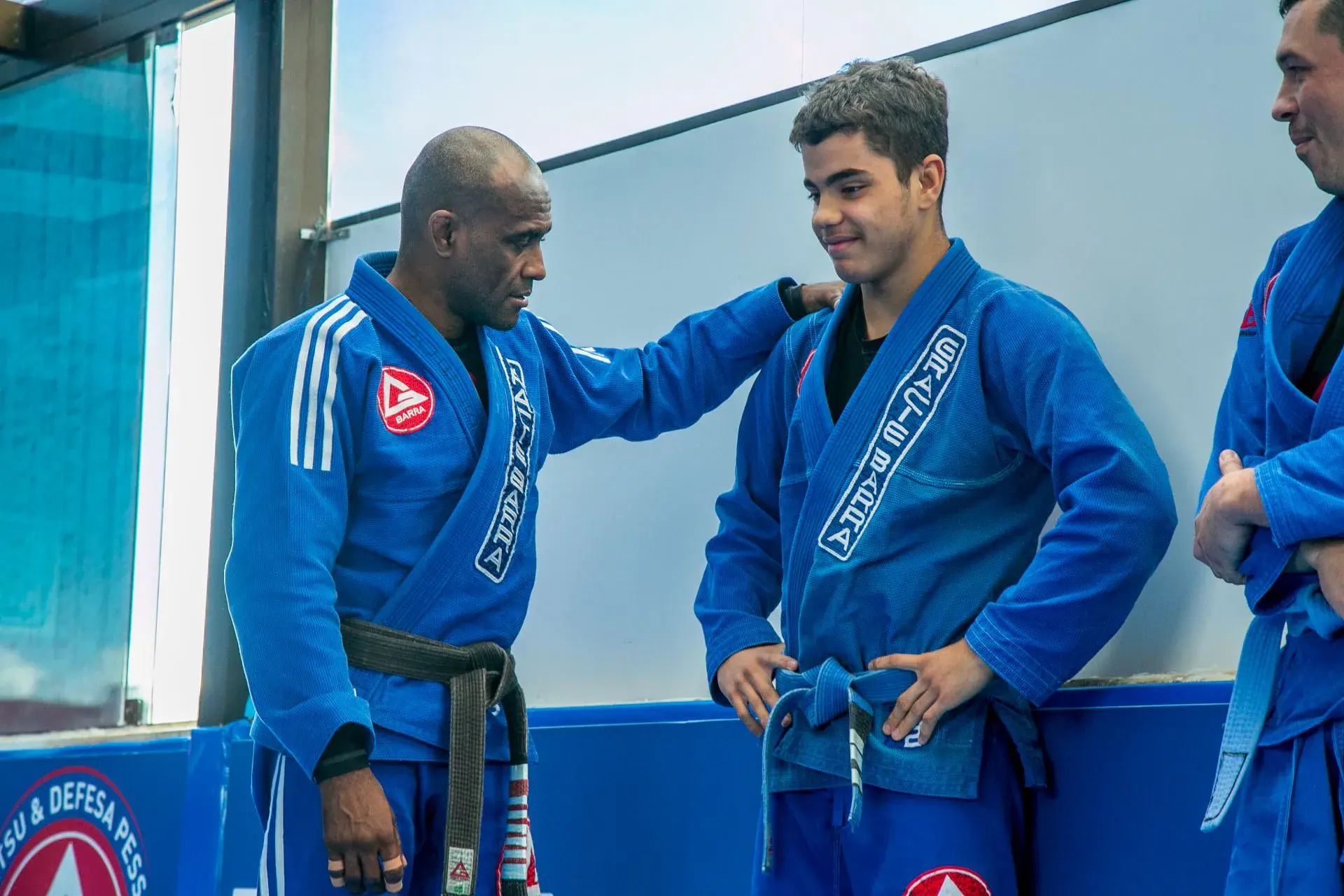
The Adult BJJ Belt Order
The IBJJF recognizes five belt colors for adults (16 and older):
- White Belt
- Blue Belt
- Purple Belt
- Brown Belt
- Black Belt
Each belt (except white) has four degrees marked by stripes. Four stripes on a belt generally signals readiness for promotion consideration, though the final decision always rests with the instructor.
White Belt — Building the Foundation
Every practitioner starts at white belt, regardless of background. White belt is where you learn how to move on the ground, how to fall safely, and how to think about positions and control. The goal isn't to win every roll — it's to develop a frame of reference for the art.
Most students feel lost for the first few months. That's expected and normal. Common milestones: surviving against more experienced training partners, understanding major positions (mount, guard, side control, back), and executing a handful of fundamental techniques.
Typical duration: 1–2 years
Blue Belt — First Major Milestone
Blue belt signals a functional understanding of BJJ. You can defend yourself against most untrained opponents, you have a developing game with positions and submissions you're comfortable in, and you understand the fundamentals well enough to start refining them. The jump from white to blue is both exciting and sometimes disorienting — many students quit at this stage, which is why the blue belt is sometimes called the "first test of character" in BJJ.
At Gracie Barra Davenport, blue belt also comes with a greater responsibility to model the school's culture — training with intention, treating partners with respect, and helping newer students feel welcome.
Minimum age: 16 | Typical duration: 2–3 years
Purple Belt — Developing Your Game
Purple belt is where BJJ becomes personal. You've been training long enough to know what works for your body type, athleticism, and preferences. Your game has a shape. You can hold your own against blue belts consistently and give brown and black belts real resistance.
Purple belts are also expected to assist lower belts and contribute to the school's learning environment. Teaching accelerates your own development and is a core part of the GB philosophy at this level.
Minimum age: 16 | Typical duration: 1.5–3 years
Brown Belt — Mastery in Progress
Brown belt is the final stage before black. Your technique is sharp, your defense is reliable, and you understand the principles behind BJJ — not just the mechanics. Brown belts at GB Davenport are expected to have a well-rounded game, teach effectively, and carry themselves in a way that reflects the values of the organization.
Minimum age: 18 | Typical duration: 1–2 years
Black Belt — Professor
At Gracie Barra, black belts carry the title of Professor. The GB black belt represents technical mastery, a deep understanding of BJJ principles, and a commitment to the mission of Jiu-Jitsu for Everyone. It is not a ceiling — most black belts describe it as the beginning of a new phase of learning. The black belt has up to 6 degrees before the coral belt (7th degree), and the highest rank in BJJ — red belt — has been held by only a handful of people in the history of the art.
Minimum age: 19 | Typical time from white belt: 8–15 years
What Does GB Davenport Look for in Promotions?
Belt promotions are the sole decision of the head instructor and are based on observation over time — not a single test. Factors that matter:
- Consistency — showing up regularly, month after month
- Technical execution — applying techniques under pressure, not just in drills
- Attitude — how you respond to being submitted, to hard days, to plateaus
- Behavior toward others — are you making the mat a better place?
- Competition (optional) — not required, but accelerates development and demonstrates readiness
The Gracie Barra Curriculum Advantage
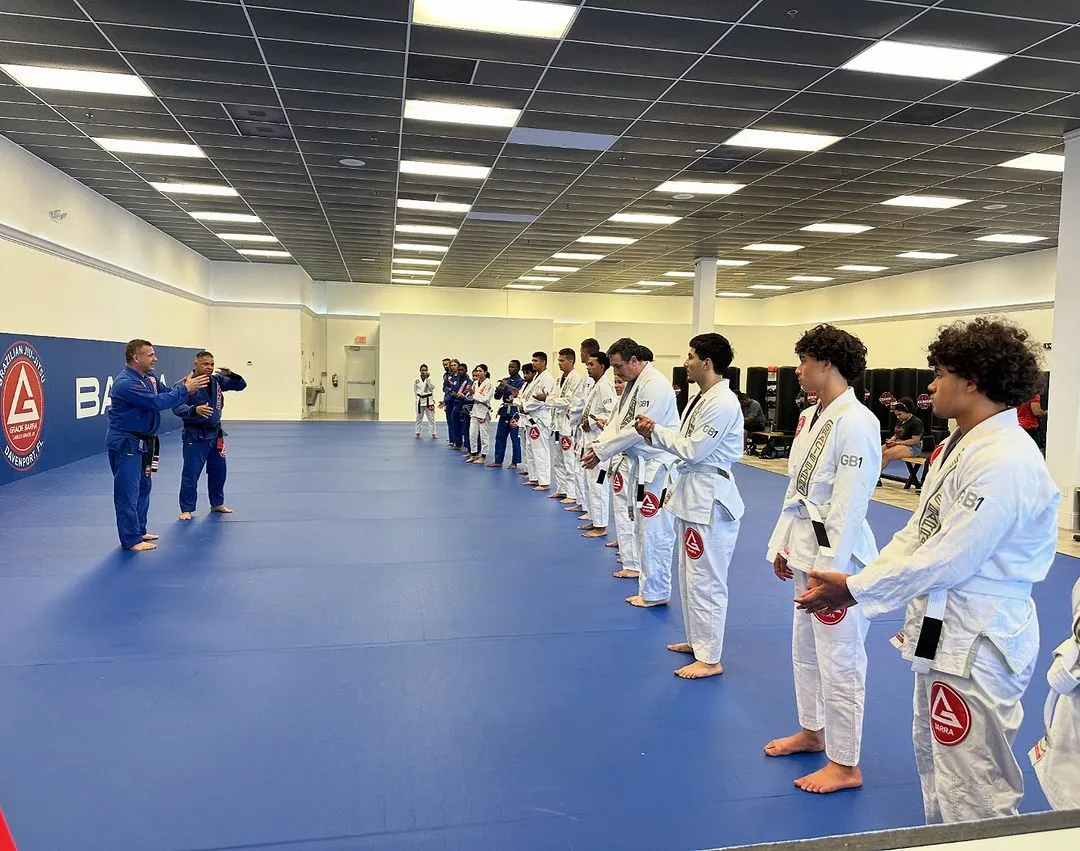
One thing that distinguishes GB Davenport from independent schools is the structured curriculum. Every class is part of a systematic program that covers all major positions and techniques across belt levels. You'll always know where you are in your development and what you're working toward — and your progress at GB Davenport is recognized at any other GB school in the world.
Ready to start? Get started here — no experience needed, all levels welcome.
Training with your kids? The kids system works differently — colored belts, more frequent milestones, and monthly promotion cycles. Read the full guide: Kids BJJ Belt Rankings at Gracie Barra Davenport.